First Timer’s Guide to Agile Mobile Development: Exploring the different phases of mobile app development
Learn moreSwipe to Check More
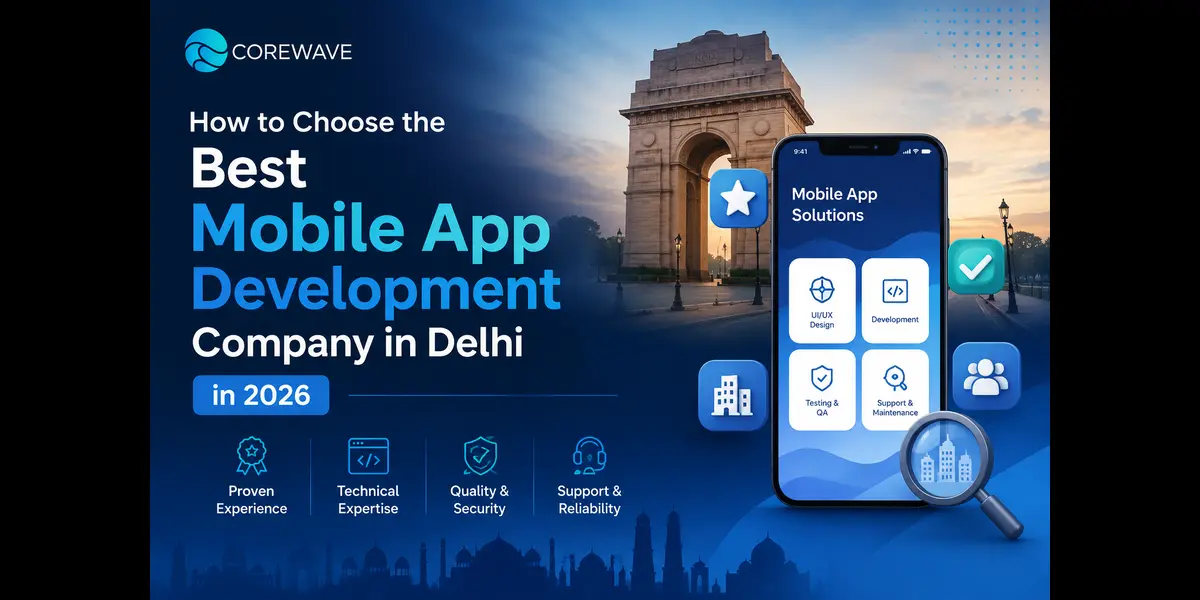
If youve begun searching for a mobile app development company for mobile devices in Delhi Youve likely noticed the issue There are a lot of possibilities, and a majority of their websites state the exact same thing. "Industry-leading." "Cutting-edge technology." "5+ years of experience." Its difficult to distinguish whos skilled and who is just a skilled copywriter.
This guide cuts through the nonsense. Well explain the essential elements that distinguish a reputable company for app development from one that is risky regardless of whether you require an Android app or an iOS app or both and what you can realistically anticipate to pay in 2026. At the end youll know exactly the you should ask prior to signing any contract.
Delhi NCR -comprising Delhi, Noida, and Gurgaon It has quietly transformed into one of Indias most active market for mobile app development in India. One reason for this is expertise: The region is home to an abundance of engineers of local universities as well as experienced developers whove relocated to Delhi from other cities to work. A large part of this is the closeness to clients -many companies, D2C brands, and companies are headquartered here and its simple to hold meetings in person to meet your needs instead of everything happening via email.
The high demand for talent means that Delhi-based teams have access to a broad range of projects ranging from fintech applications that have strict compliance requirements and e-commerce applications designed for the masses, healthcare applications which require careful handling of data and everything else between. This breadth is more important than you think when selecting a partner, as teams that have only created one type of app is likely to repeat the same mistakes on each new project.
Forget about the marketing text for another second. Heres what can be predicted if the project will go well.
A portfolio that you can examine. Not just screenshots on a site -- request real-time App Store or Play Store links to apps theyve created, and then to read the reviews. A team that is proud of their work will give these over without hesitation.
You own your designs and code. Some agencies quietly keep rights to reused components or delay the transfer of the source code until the final payment is cleared in full, often weeks later. Make sure you have this written down before you begin.
A genuine process that is not just a sales pitch. Ask them to explain the typical way a project operates -design, discovery development sprints, QA as well as post-launch support. If the answer is unclear this is usually a sign the process isnt clear enough.
Post-launch support is spelled out not implied. Apps need updates to new OS versions as well as bug fixes and minor feature enhancements long after the launch. Find out whats included following delivery and what qualifies as a separate, billable demand.
If youre looking for alternatives then choosing a mobile app development company in Delhi with a proven local track performance, a transparent process and genuine client references is typically better than the lowest quote that you get that you receive in your inbox.
This is among the first decisions youll ever make that will impact your budget as well as your timetable, and, in fact, your entire strategy.
Make Android the first choice if your intended users are primarily from India (Androids market share in India is more than 90 percent) Your budget is less than ideal or youre trying out an MVP before making a decision to build a larger version.
Make the switch to iOS if Youre targeting a high-income user base, or building for international markets such as the US or UK where iOS use is significantly more frequent, or your business model is based on the number of users who pay more money on apps (subscriptions premium features, subscriptions and so on. ).
Create both from the beginning in the event that You have the funds for it and dont want to lose either audiencethis is a common scenario in fintech, healthcare and consumer apps in a competitive space in which being only on one platform can be an issue to users.
Many businesses in Delhi develop natively for both platforms, rather than switching platforms, especially when camera features, performance or even deep OS integration are crucial. If youre in that situation its best to collaborate with a team who has a dedicated team on both sides Android application development in Delhi and iOS app development in Delhi are two distinct capabilities and a business who treats them as an interchangeable service is likely to cut corners somewhere.
An excellent Android development plan for 2026 typically involves the development of Kotlin (the most current version, not the more ancient Java approach that many teams have discarded) and an Material Design interface that feels like it is native to the platform and testing on a diverse range of devicesas opposed to iOS, Android users are distributed across a myriad of device manufacturers sizes, screen sizes and OS versions.
Timeline-wise a basic Android app usually takes 8-14 weeks from the moment of launch to launch depending on the number of features youre adding and the amount of backend work involved. The teams that give you two weeks to develop an "custom" app are usually using a template that is acceptable for simple projects, but its important to know the basics.
iOS development is currently referred to as Swift and SwiftUI which are Apples current frameworks to build native applications. The App Store review process is more stringent than Google Plays, and its important that your developer has launched apps before and anyone who hasnt had to deal with an app being rejected for a violation of a guideline wont understand how to avoid it in the first place.
iOS timelines are generally similar to Android about 8-14 weeks for a typical app, though the App Stores review process can add a few days at the end that you should incorporate into the date of your launch, particularly in the event of a specific announcement or a marketing campaign around it.
Pricing can be quite different dependent on the complexity of the task however, heres a reasonable price range for 2026:
Simple applications: (basic functions, only a few screens, no complicated backend) approximately 4-7 lakhs
Applications of moderate complexity: (user accounts, payment moderate backend API integrations) approximately Rs6-14 lakhs
Complex applications: (real-time features and heavy backend logic AI/ML and multiple integrations) up to Rs15 lakhs. up
If a quote is significantly lower than these levels be sure to ask whats included. Its common for low-cost quotes to not include things like post-launch assistance and submission handling for apps and even simple QA testing and all of these are charged separately later.
Certain patterns are likely to hint at trouble later on The most obvious is when you inquire about the actual development process and a reluctance to provide the actual client contact numbers for an initial call contracts that dont specify who is the owner of the final code and pricing that appears too attractive to be true to the range youve described. These arent a problem by themselves however if you notice multiple of them, you should consider pause and asking questions prior to signing.
Theres no one "best" company for everyone the best choice will depend on the amount you can afford, your timeframe and how involved youd like to be throughout development. Whats most important is selecting a company that is transparent about their processes, has evidence of previous work and is clear from the first phone call. The first call usually tells the client more about how the project will be conducted than any portfolio page will.
Most standard apps require between 8 and 14 weeks from the time of launch to kickoff. Simple MVPs can be quicker than apps with complicated backend systems or large third-party integrations could take longer.
An established company usually has higher accountability, a standardized procedure, and continuous support after the launch. Freelancers are cheaper for small-scale projects however they can be more risky when theyre unavailable mid-project.
For most businesses that focus on India, Android first makes sense because of its dominant market share in this country. If your goal is international customers or a high-end market, iOS may be worth considering instead.
This varies by company, but usually includes bugs fixes and OS compatibility updates and minor performance enhancements. The development of new features is usually charged separately make sure you know this prior to making any agreement.
Cross-platform frameworks like Flutter or React Native work well for numerous business applications that are standard and can save 30 to 50 percent on costs. Native development is a worthwhile investment if performance cameras, camera features or a deep OS integration are crucial to the user experience of your app.